
The plan of salvation was conceived before time began (Eph 1:4; 1 Pet 1:20; Rev 13:8), then revealed little by little through the ages to mankind, making it a once concealed, but since revealed “mystery” (Eph 3:3–6; Rom 16:25–27). Regarding Old Testament prophets who recorded the history of God’s working toward this perfect salvation’s full revelation, Peter wrote that they did not get the full import of all the things they wrote; indeed, not even angels did (1 Pet 1:10–12).
The New Testament makes it clear, though, that such piecemeal revelation is over. For a time, God allowed miracles through Christ and the apostles to verify the word of God (John 20:30–31; Mark 16:20; Heb 2:1–4). It was always prophesied, though, that the end of such things would come when the need for them was over.
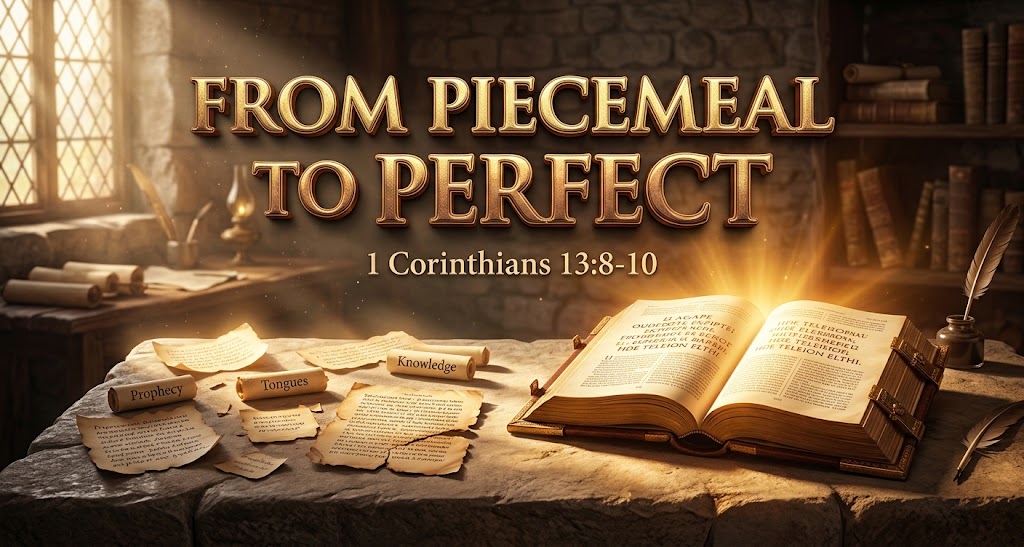
1 Corinthians 12–14 deals with the abuse of spiritual gifts by the church at Corinth. Chapter 13, frequently cited as “the love chapter of the Bible,” is a study in how love works better than the way they were trying to show off their gifts in the worship assembly. To cap off the argument, Paul says that those miraculous gifts like prophecies, miraculously received knowledge, and tongue-speaking (speaking in a foreign language not previously studied) would cease “when that which is perfect has come” (vs 8–10).
“That which is perfect” is the fully revealed New Testament. Some have contrarily contended that “that which is perfect” is the second coming of Christ, thus meaning miraculous gifts would continue until the Lord’s return. That cannot contextually be. The passage indicates that at such time, three gifts would remain: faith, hope, and love (v 13). However, faith, “the evidence of things not seen” (Heb 11:1), will not exist any longer when “we see Him as He is” (1 John 3:2). With sight, faith is unneeded. Neither will hope exist when hope has been realized (Rom 8:24–25). Faith and hope exist in this world in anticipation for the next; love continues there.
Therefore, “that which is perfect” had to be the completion (that meaning is entailed in the word) of something during earth-time. It makes sense that such is the fully revealed word of God. It would no longer come piecemeal; it would be given in full, totally sufficient to make a man of God “complete” (2 Tim 3:16–17) through its study and “approved to God” by his “rightly dividing the word of truth” (2 Tim 2:15).
Completed Scripture even reveals the mechanism by which the piecemeal revelations and miracles would cease. Apostles did miracles (Acts 2:43). They laid their hands on others, who could then do miracles, Philip being a prime example (Acts 6:5–6; 8:6). Philip could do miracles, but when he needed to pass on miraculous abilities, he had to call apostles to lay hands on people; he could not do it himself (Acts 8:14–18). It was “through the laying on of the apostles’ hands the Holy Spirit was given” (8:18). Thus, when all apostles died, nobody new would be getting such gifts. When all of the recipients of those gifts died, those gifts died, too. Not coincidentally, the timing would work out to roughly the end of the first century, about the time the last books of the New Testament (“that which is perfect”) were completed.
Now, Christians have the full revelation of the mystery to study. They can fit James’ admonition: “But he who looks into the perfect law of liberty and continues in it, and is not a forgetful hearer, but a doer of the work, this one will be blessed in what he does” (Jas 1:25 NKJV).